
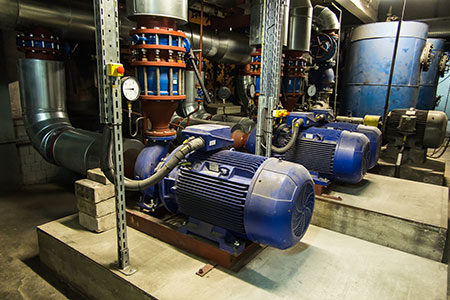
A booster pump raises water pressure when the supply coming into a building or system is too low to serve every fixture, floor or process. A motor spins an impeller that adds pressure to the incoming water, and a controller speeds the pump up or down to hold a steady set point as demand changes. Commercial buildings, schools, hospitals, plants and high-rises in the Houston area rely on booster systems to keep pressure consistent from the first floor to the top floor.
Elite Pumps & Mechanical Services repairs, rebuilds, supplies and installs commercial booster pump systems from our Houston machine shop, with 24/7 emergency service at 832-774-0939.
Types of Commercial Booster Pump Systems
The right system depends on how much water the building uses, how much its demand swings through the day, and how much downtime it can tolerate. Show this as a table on the page.
| System type | How it works | Best fit | Watch out for |
|---|---|---|---|
| Variable speed (VFD) booster package | Two or more pumps on variable frequency drives hold a constant pressure by changing speed with demand | Most mid-rise and high-rise buildings, schools, campuses | Drive faults and sensor failures; needs controls expertise to service |
| Constant speed booster with pressure-reducing valves | Pumps run at full speed and valves trim pressure down | Older buildings with existing systems | Higher energy use and more wear; often a candidate for a VFD upgrade |
| Duplex or triplex package | Two or three pumps share the load and back each other up | Any site where losing water is not acceptable | Lead/lag rotation must work, or one pump wears out early |
| Hydropneumatic system | A pump fills a pressure tank that serves light demand between pump cycles | Lower-demand buildings, irrigation, small facilities | Waterlogged tanks cause rapid cycling and early pump failure |
| Single-pump inline booster | One pump raises pressure in a single line or zone | A single process, an upper zone, or a fixture group | No redundancy if it fails |
|
Fire pump |
A dedicated pump that supplies fire sprinklers and standpipes |
Buildings where city pressure cannot meet fire system demand |
Governed by its own testing and code requirements; separate from domestic water boosting |
Where Booster Pumps Are Used
Water loses about 0.43 psi of pressure for every foot it rises. In a building several stories tall, city pressure alone often can’t reach the top floors with enough force for showers, flush valves and equipment. Booster pumps make up that difference in settings like these:
- High-rise and multifamily buildings. Upper floors need boosted pressure, and a pressure drop means tenant complaints within minutes. Learn more about multifamily pump service.
- Schools and campuses. Demand spikes between classes and drops to near zero at night, which suits variable speed systems. See educational facility pump service.
- Municipal booster stations. Utility districts use booster stations to keep distribution pressure up across growing service areas. See municipal and industrial projects.
- Industrial and process water. Wash-down, cooling and process lines often need higher or steadier pressure than the supply provides.
- Well and storage tank systems. Water drawn from a ground storage tank has little pressure, so a booster set delivers it into the building.
- Water and wastewater plants. Plants use boosters for wash water, seal water and chemical feed lines. See water and wastewater treatment pump services.
Signs Your Booster Pump System Needs Service
Most booster failures give warning first. A symptom often points to a part other than the pump, which is why a full-system check matters. Show this as a table on the page.
| What you notice | What it usually means |
|---|---|
| Low pressure on upper floors only | A pump is underperforming, a drive is limited, or the pressure set point has drifted |
| Pressure swings up and down | A failing pressure transducer, a drive tuning problem, or a bad check valve |
| Pumps start and stop rapidly | A waterlogged or undercharged pressure tank, or a faulty pressure switch |
| Grinding, rattling or loud humming | Worn bearings, a damaged impeller, or cavitation from low suction pressure |
| Pumps run constantly at night | A leak somewhere in the building, a stuck valve, or a broken low-flow shutdown |
| Water around the pump base | A failing mechanical seal or a cracked casing |
| Drive alarms or breakers tripping | Motor winding problems, a failing drive, or voltage issues |
| Rising energy bills | Pumps running harder than needed, often a constant speed system or worn impellers |
If you see one of these, call before it becomes a full outage. A planned repair costs far less than an emergency one.
Repair, Replace or Upgrade?
Repair usually makes sense when the system is reasonably young, the problem is a single component such as a seal, bearing, sensor or drive, and parts are still available. Our machine shop rebuilds many pumps to like-new condition for less than the cost of replacement.
Replacement usually makes sense when the pump casing is cracked or badly corroded, parts are discontinued, or the same failure keeps coming back. Repeat failures often mean the pump was sized wrong for the building’s actual demand.
An upgrade is worth a look when you have an older constant speed system. Converting to variable speed drives can cut energy use, reduce wear, and give smoother pressure. We can evaluate whether a drive retrofit on your existing pumps or a new packaged system is the better value.
Why sizing matters
An oversized booster short-cycles and wears out early. An undersized one can’t keep up at peak demand, so the top floors lose pressure in the morning rush. Before recommending equipment, we look at the building’s height, fixture count, incoming supply pressure, peak and low-flow demand, and any plans for added load.
Booster Pump Services from Elite Pumps in Houston
Elite Pumps & Mechanical Services has serviced commercial and industrial pump systems from our Houston shop since 2017. For booster systems, we handle:
- 24/7 emergency repair for loss of pressure, drive faults and pump failures
- Diagnostics of the whole system: pumps, motors, drives, sensors, tanks, check valves and piping
- Shop rebuilds in our in-house machine shop, with rental pumps available while yours is out
- Control and VFD repair and upgrades through our pump control systems team
- New booster packages from assessment and sizing through installation and startup, via sales and supply
- Preventive maintenance agreements with scheduled inspections to catch wear before it causes an outage
We work on all major brands, including Grundfos, Goulds, Aurora, Bell & Gossett and Xylem.
Low pressure or a booster down? Call our 24/7 line at 832-774-0939 or request service. Office: 281-506-7390.
Frequently Asked Questions about Booster Pumps
What is a booster pump and do I need one?
A booster pump increases water pressure in buildings or systems where municipal supply pressure is insufficient. You likely need one if occupants on upper floors experience weak pressure, if your building is tall, or if you’re far from the municipal water main.
How long does a commercial booster pump last?
With proper maintenance, a commercial booster pump typically lasts 10–15 years. Lifespan depends on usage, water quality, and how consistently the system is inspected and serviced. Regular preventive maintenance significantly extends pump life.
What are some signs that a booster pump needs repair?
Common signs include inconsistent water pressure, unusual noise or vibration, frequent cycling on and off, visible leaks, or a complete loss of pressure. If you notice any of these, schedule an inspection before the issue becomes a full failure.
Can you repair my existing booster pump or does it need to be replaced?
In many cases, repair is the more cost-effective option. Our technicians perform a full diagnostic to determine whether the pump can be restored to reliable performance or whether replacement is the better long-term investment.
What brands of booster pumps do you sell and service?
We sell and service all major commercial booster pump brands, including Grundfos, Goulds, Aurora, Bell & Gossett, Xylem, and others. We can source replacement parts and full system replacements.
Do you install new booster pump systems?
Yes. We handle the full scope — assessment, system design, equipment supply, installation, and commissioning — for new booster pump installations in commercial and industrial buildings across Texas.